All businesses depend on water, whether you're using it to power your operations or simply for your staff and customers.
With our changing climate, using water wisely isn't just about protecting our environment - it’s also about protecting your bottom line. By making a few small changes, you can lower your water bills and reduce the energy needed to heat water, all without affecting your day-to-day work.

Tap into wasted water
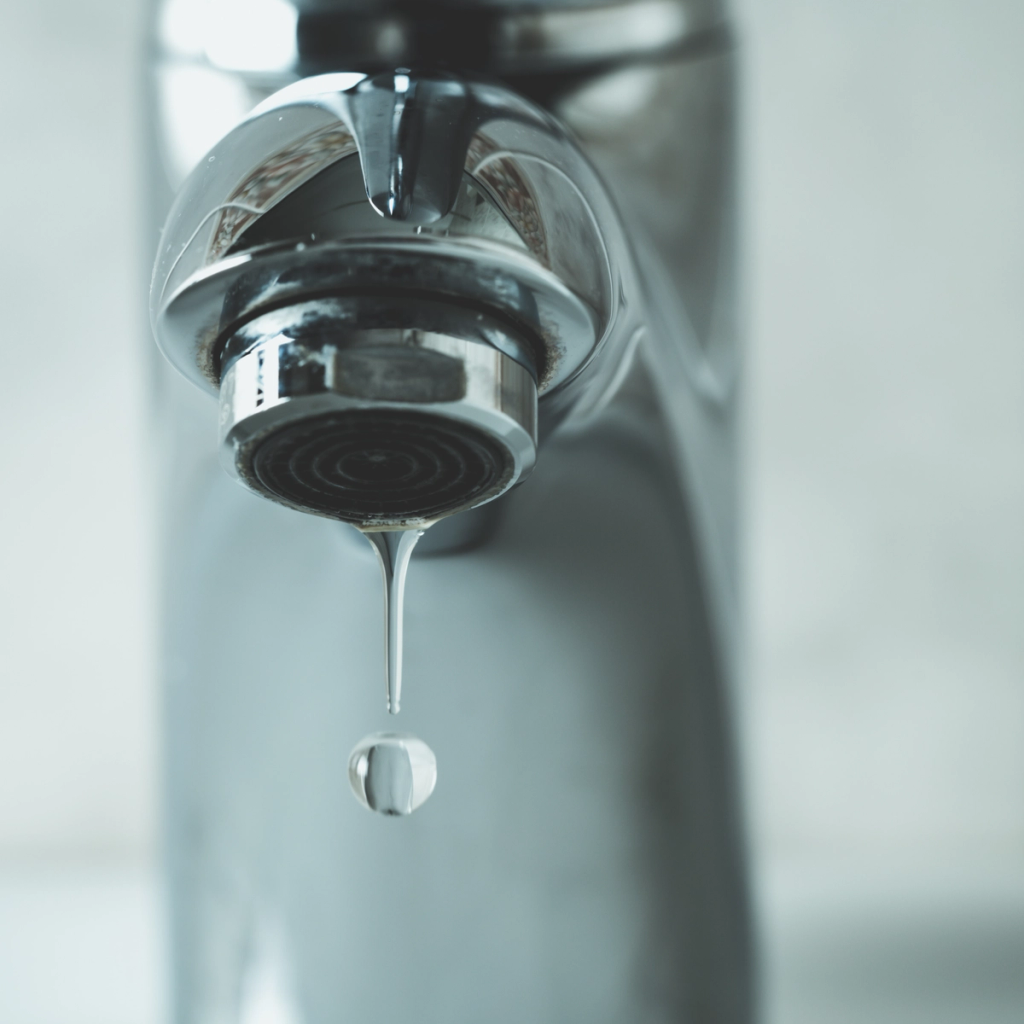
A dripping tap might not seem like much, but it can waste up to 5,000 litres of water a year! Fixing a dripping tap is a quick and easy way to save water in your business.
Sneaky leaky loos
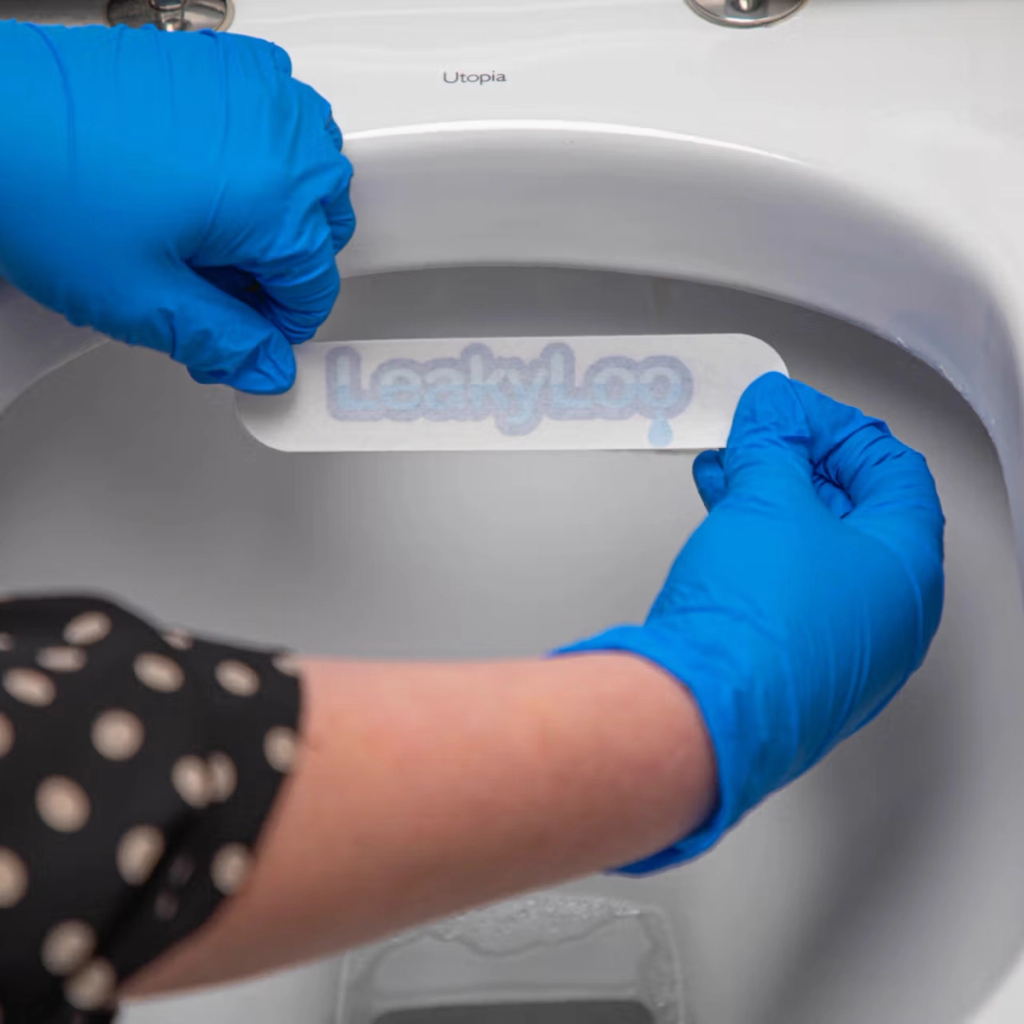
A sneaky leaky loo (or two!) can be costing you as much as 4 baths of water a day each. Order FREE LeakyLoo™ detection strips from us here, to check if your loos might have a leak.

Implement a water-saving plan
Encourage staff to think about how much water they use at work. Simple changes like turning off taps fully and telling you about leaks will make a big difference.
Updates about your water supply
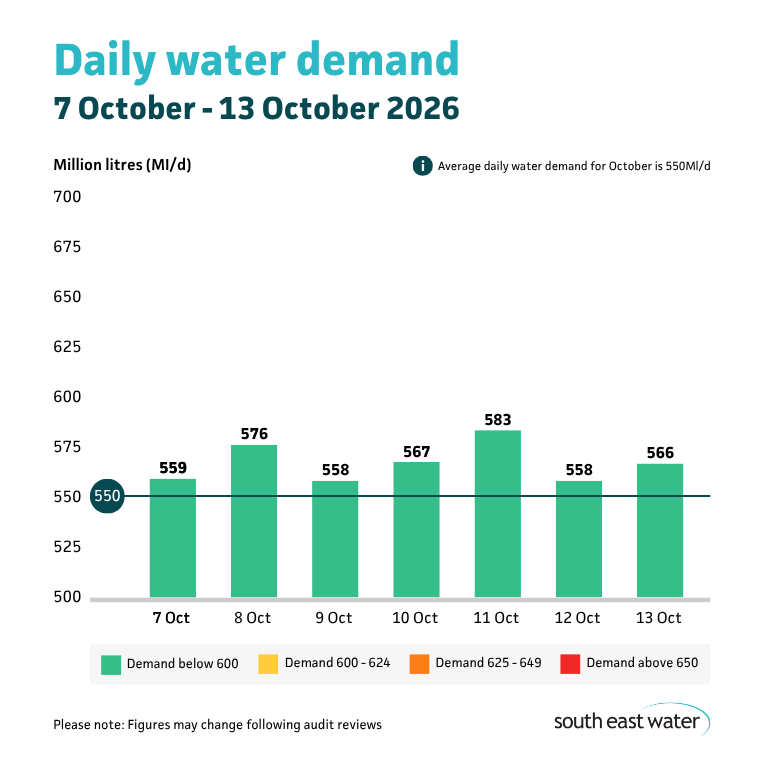
The amount of water that people use each day changes depending on the weather, which can impact businesses. We usually supply around 550 million litres of water a day. In the summer months, this can go up to over 600 million litres a day.
Why we need to further safeguard water supplies
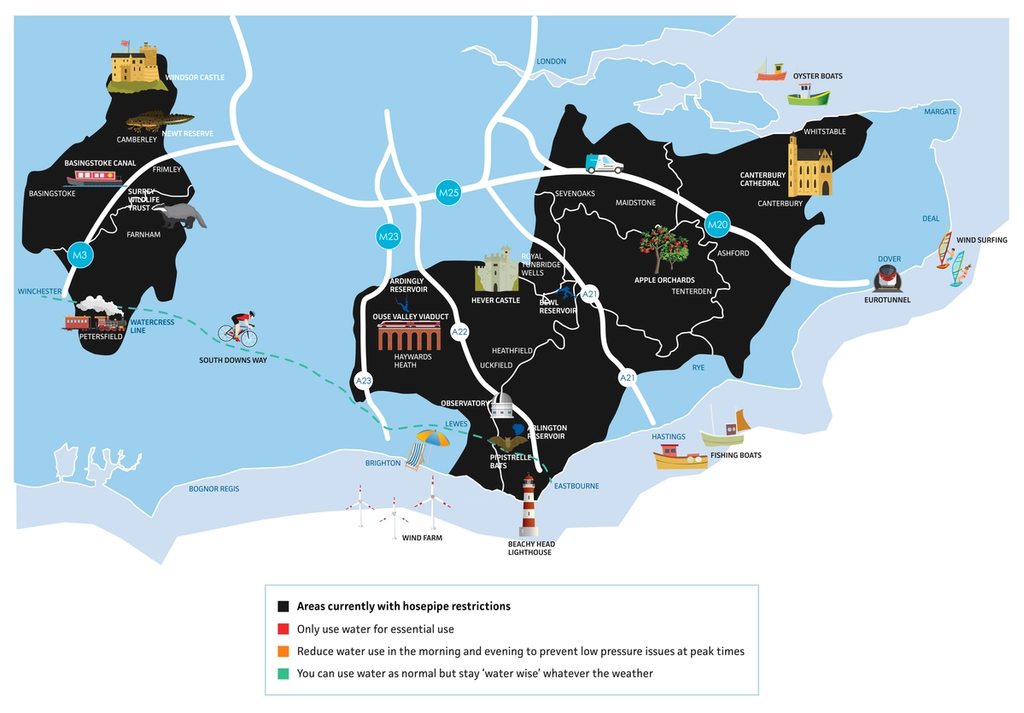
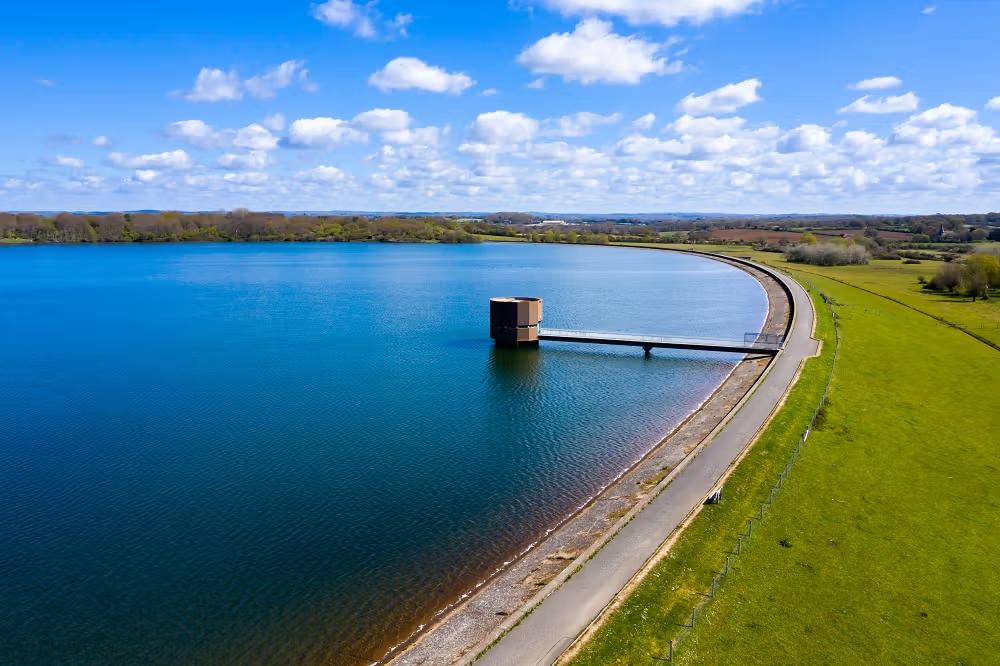
Following an exceptionally hot summer and below average rainfall - where Sussex received just over 56 per cent of its expected rainfall between March and August - reservoir and aquifer levels remain critically low.
To safeguard essential drinking water supplies, we have taken two significant statutory steps affecting our Sussex region:
- Removed certain exemptions under our Temporary Use Ban (TUB), which has been effective since Friday 9 October 2026.
- Applied for a Non-Essential Use Ban (NEUB) under a Drought Order to restrict specific non-household mains water uses if drought conditions worsen.
Removal of Temporary Use Ban (TUB) exemptions in Sussex
Hosepipe restrictions have been tightened across Sussex, directly impacting businesses providing or relying on certain commercial cleaning and maintenance services:
- Exemptions removed: Hosepipe cleaning of windows, walls, paths, patios, and private vehicles as a commercial service; filling/maintaining domestic pools or hot tubs following construction/repair; and standard domestic pond maintenance using a hosepipe.
- What remains exempt: Essential health and safety uses; animal welfare; recycled water systems; watering commercial crops/plants for sale; drip/trickle irrigation systems (with timers/pressure valves); and sports pitch active-area watering (outside 8am–10am and 5pm–9pm).
We’ve applied for a Non-Essential Use Ban (NEUB)
This is currently an application only and will only be implemented if the drought situation becomes more severe. If granted and implemented, it will restrict non-household mains water use for:
- Hosepipe watering of outdoor commercial plants
- Filling or maintaining non-domestic pools, hot tubs, or ponds
- Operating mechanical vehicle washers
- Hosepipe cleaning of commercial vehicles, non-domestic premises, windows, and industrial plant
- Suppressing dust using a hosepipe
- Automatic cistern flushing in unoccupied or closed buildings
What are we doing?
We have fast-tracked key engineering projects to move water across our network more efficiently, safeguard Ardingly Reservoir, and secure your local supply.
Key actions include:
- Optimising network pressure: Active pressure management reduces network stress, cuts background leaks, and prevents pipe bursts for a more reliable supply.
- Boosting leakage teams: We’ve raised local repair staff to a record 21 repair teams and doubled regional support crews from 7 to 14 (with more coming) to find and fix leaks faster.
- Bewl to Cottage Hill pipeline: Fast-tracked a pipeline from Kent into East Sussex, to reduce reliance on Ardingly.
- Boosting treatment capacity: Bringing a treatment site back online to add 1.4M litres/day.
- Drought Permit: Granted a Drought Permit(opens in a new tab) to reduce environmental river releases and conserve stored water in Ardingly Reservoir.
How your business can help this winter
A Temporary Use Ban still applies for customers in Kent, Surrey, Berkshire and Hampshire. Even if your business is exempt from restrictions, we still need your help in saving water as we approach a very uncertain winter.
Here’s how you can help:
- Fix leaks quickly: Inspect taps, toilets, and pipework regularly - a leaking toilet can waste thousands of litres daily.
- Control automatic flushes: Fit sensors or timers to urinal cisterns and turn off flushing in empty or closed buildings.
- Switch to an efficient kit: Use trigger nozzles, micro-irrigation systems, or recycling equipment to cut water use.
- Engage your staff: Encourage teams to report leaks immediately and practise water-saving habits across your site.